Trinity Boxing Club
The Trinity Handbooks — Number SixNew York · Los Angeles

The Eyes Lead the Body

Training Vision, Anticipation, and Peripheral Sight for Boxing and Sport

How vision guides movement

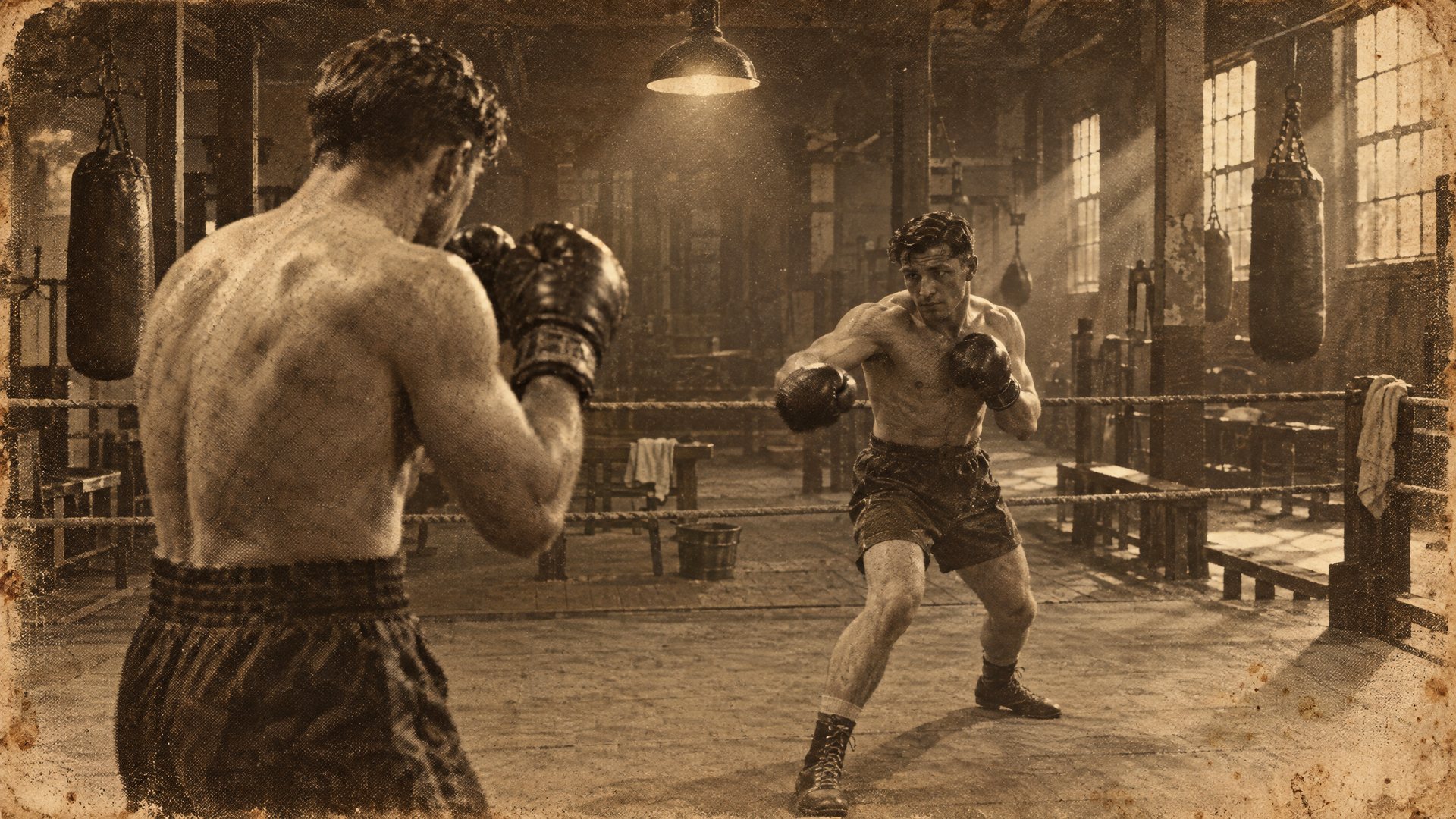
Two boxers in a period gymnasium. The fighter in the foreground keeps his guard high and his eyes fixed on his opponent's chest and shoulders rather than on the gloves.
Watch the chest, not the gloves. The parts of a man that cannot lie.
Nobody ever got knocked out because he was too slow. He got knocked out because he was looking in the wrong place.
The Trinity Handbooks — Number Six

Roughly eighty percent of what you take in during a fight comes through your eyes. Almost nobody trains them.

This is how we do it at Trinity: four principles, four drills, ten minutes a day. No gadgets, no gimmicks, no course to buy. A wall, a tennis ball, a taped X, and somebody willing to throw punches at you.

The Manifesto

Sight is the picture. Vision is what you do with it — and only one of them is a skill.

Sight Is Not Vision

You have two eyes and a brain, and most people only ever train one of them. Sight is the picture. Vision is what you do with it. Sight is reading the letters off the chart in the doctor’s office — the E, the F, the P. Vision is knowing that the man in front of you is about to throw a left hook before the glove has moved an inch. They are not the same thing, and only one of them is a skill.

Here is what the research will tell you, and what any old trainer in any old gym will tell you for free: roughly eighty percent of what you take in during a fight comes through your eyes. But your eyes are not a camera. Only a patch of your vision smaller than your thumbnail held at arm’s length is actually sharp — about two degrees of visual angle. Everything else, the entire rest of the world, reaches you through the periphery. And in boxing, the punches come from the periphery. They come from the edges. They come out of the corner of the frame, from a man who has spent three rounds learning exactly where your eyes stop looking.

So when a fighter tells me he needs to get faster, I ask him what he is looking at. Nine times out of ten he does not know. He has never thought about it. He has been training his hands for years, and his eyes never once.
The Eyes Lead the Body

Watch a beginner in the gym. Head down, chin up, eyes on the floor — or eyes glued to his opponent’s gloves like they were the only thing in the room. Now watch somebody who has been at it a while. Chin tucked, eyes up, watching the chest and the hips and the shoulders. The parts of a man that cannot lie. And when the punch comes, his feet are already moving, because his eyes told them where to go a half-second earlier.

That is the whole thing. The eyes lead the body. Where they go, the feet follow. Where the feet go, the hands follow. If the eyes stop, the feet stop, and a fighter with stopped feet is a heavy bag with a pulse.

There is a thing researchers call the quiet eye. It is the last long look a good athlete takes before he moves — one fixed gaze, locked on target, held through the action. What they found is that the best performers do it earlier and hold it longer than everyone else, and that they hold it longer on the shots that land than on the shots that miss. That is not magic and it is not talent. It is a habit. It can be taught, it can be trained, and it can be trained in your living room in ten minutes a day.

I have had fighters come to me with fast hands and slow eyes. They never last. The eye is the first thing that has to be right.

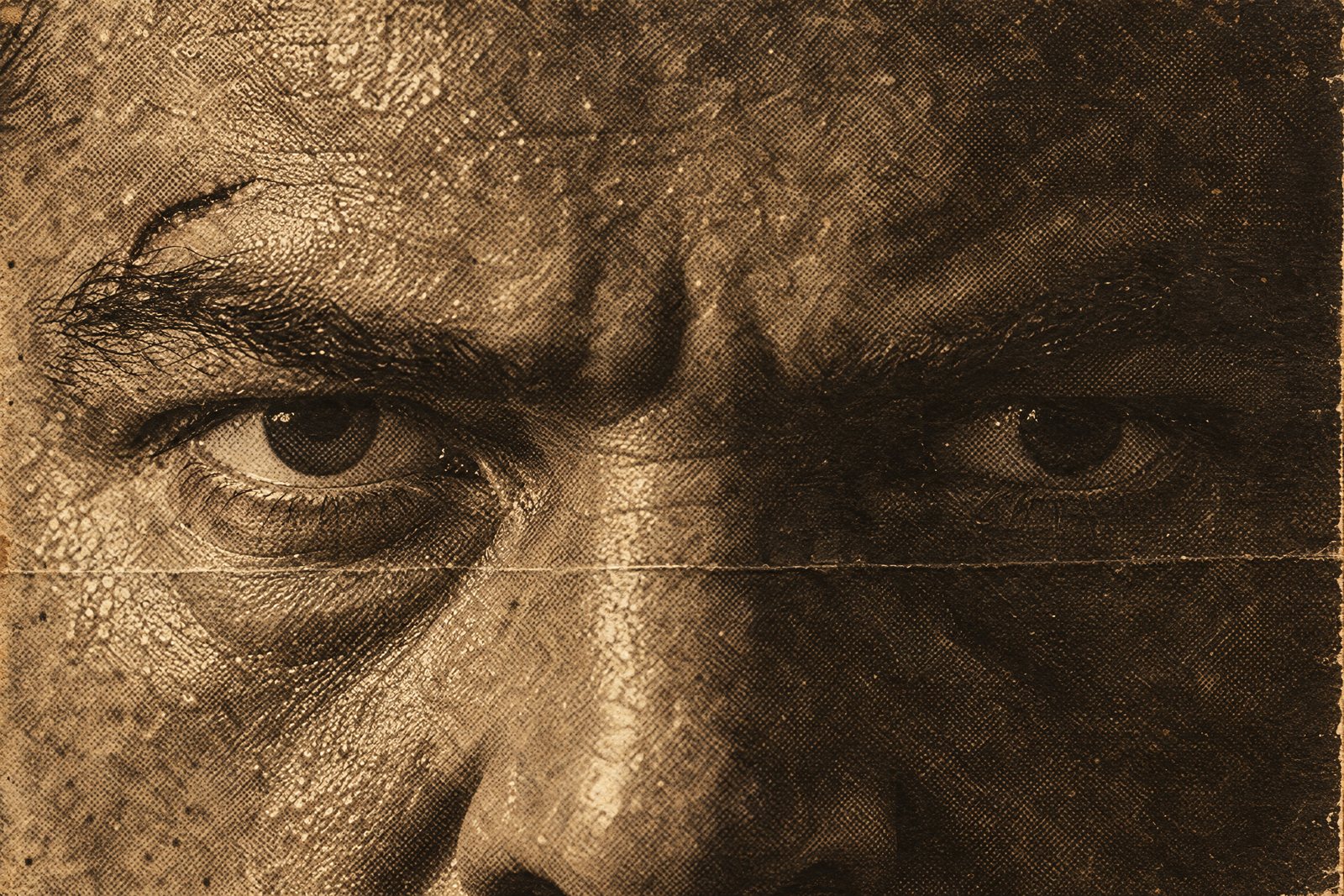
Extreme close-up of a boxer's eyes and brow, printed as a sepia halftone. The gaze is locked and absolutely still.
The quiet eye: the last long look before he moves, held through the action.

The Illusion of Good Eyesight

Most fighters never train their eyes, and the reason is simple. Nobody ever told them they could. They will spend an hour on their legs, an hour on their lungs, an hour on the bag. They will do roadwork at five in the morning in the rain. They will do all of it without once stopping to ask whether the instrument they are steering with is pointed in the right direction.

There is a second mistake, and it is worse: watching the gloves. The glove tells you where the punch is. The shoulder tells you where it is going. By the time the glove moves, the decision has already been made — the hips have turned, the weight has shifted, the shoulder has loaded. If you wait for the glove, you are always reacting to news that is already old. The man who reads the shoulder gets to start moving while the other man is still finishing.

And there is a third illusion, the most comfortable one: the idea that you will simply be faster on the night. That you will see it when it counts. You will not. Reaction time is not courage and it is not adrenaline. It is mostly the product of what you noticed first. Under pressure the body does what it has practiced and nothing else. If you have never practiced looking in the right place, you will look in the wrong place — faster than ever, at exactly the wrong moment.

The Trinity Philosophy

At Trinity we train the eyes the way we train everything else. Small, boring, every day. Not an hour on a gadget. Not a course you buy online. Two minutes of head-bob against a taped X on the wall. Ten numbers called out across the room. Three rounds with a partner behind a screen so you only ever see the beginning of the punch. It is not glamorous and it does not photograph well. It works.

We do it last, too. Not first, when you are fresh. Last, when your legs are heavy and your shoulders are burning and the room has gone soft at the edges. Because that is the condition you will be in when it matters. Vision is the first thing to go when you get tired. A fighter who can still see clean in the fourth round of a hard fight owns an advantage no game plan can take away from him.

There is no mystery in this. The gym has never been a place for mystery. There is work, and there is the man who did the work. The eyes are the first student in the room and the last one to graduate. Teach them, and everything else you have built gets to come out and play.

The Four Core Principles

Everything in this book stands on these four. Learn them in order.

Principle I

See Wide Before You See Sharp

Your sharp vision is a spotlight about the size of a thumbnail. Your peripheral vision is the other hundred and seventy degrees, and it is where the trouble lives. Most fighters do the opposite of what they should: they stare a hole in the centre of the picture and let the edges go dark.

Train the wide field first. Learn to notice motion at the edge of your vision without turning your head toward it, because turning your head toward it is exactly the movement your opponent is waiting for. See it wide, then bring the spotlight onto it. Never the other way around.

Principle II

Fix Early, Hold Long

A jumping eye misses. The mistake is to let your gaze flicker — chest, glove, feet, back again, hunting for information that was never going to be there. Every jump costs you time and buys you nothing.

Pick your target, lock on it early, and hold it through the punch. Hold it through the impact. The eye that stays still sees more than the eye that is busy. On the bag, watch one spot and keep watching it. In the ring, fix your eyes on the chest and leave them there until the exchange is over.

Principle III

Read the Body, Not the Gloves

The gloves are the last thing to arrive. The hips are the first. Between them, the shoulders and the feet. If you want to know what is coming, watch the parts of a man he cannot disguise: where his weight is, which foot is turned, which shoulder is loading.

A feint is a lie told with a glove; the body underneath it is usually telling the truth. Learn the order of the mechanics — hips, shoulders, hands — and you will start seeing punches at the beginning instead of the end.

Principle IV

Train It Tired, Train It Every Day

Vision is the first thing to go when you get fatigued, and it goes quietly. You will not feel your eyes slow down the way you feel your legs go. So train them under load: after the rounds, after the roadwork, when you are breathing hard and the room is swimming.

Two minutes a day, every day, beats an hour once a week. And it must be every day, because this is a skill built on repetition and there is no shortcut in it. Nobody ever got sharp on a good day.

The Four Drills

Do these in order the first time through. Each one builds the next: the Still Eye teaches the gaze to hold, the Wall of Numbers teaches it to move, the Bounce Ball ties the eye to the hand, and the Half-Blind Round puts the whole thing under pressure.

All four together take less than fifteen minutes and you need almost no equipment — a wall, some paper, a tennis ball, and somebody willing to throw punches at you.

Warm up first, every time: hold a thumb at arm’s length, focus on it, then snap your focus to the far wall. Ten times each way. That is accommodation — the lens changing shape under orders — and it is the cheapest part of the whole routine.

Keep it honest. If you cannot do two minutes without your eyes wandering, you have just found your problem, and you found it for free.

Run them in this order the first time

Drill One

The Still Eye

2 minQuiet eye · gaze stability

Objective

Hold your gaze locked on one point while your head moves underneath it — exactly what happens when you slip a punch.

Setup

Tape a small X on a wall at eye level, three feet away. Get in your stance, hands up, chin tucked. Bob the head in a slow U — down, across, up — while the eyes stay glued to the X. One point and nothing else. Do not let the eyes wander to the wall’s other features.

Progression

Have a partner hold up fingers at the far edges of your vision while you bob. Call out how many without moving your eyes off the X.

Watch for

What good looks like

Two minutes with the X never leaving the centre of his vision, and his breathing unchanged at the end.

The common mistake

He bobs his head and his eyes follow it. Then he is only nodding.

Drill Two

The Wall of Numbers

2 minSaccades · span of recognition

Objective

Make the eyes jump fast and land clean, and widen how much can be read in a single look.

Setup

Put eight to ten numbered cards on a wall, spread wide and at different heights, six to eight feet away. A partner calls a number; the fighter finds it and calls back the number printed beside it. Two minutes. Then speed it up until he starts missing.

Progression

Do it standing on one leg, or straight after thirty seconds of shadowboxing, so the eyes have to work while the legs are working.

Watch for

What good looks like

Finding and reading a card in under a second, with the head never turning.

The common mistake

He finds the card and then leans in to read it. Distance is the point.

Drill Three

The Bounce Ball

3 minHand-eye coordination · tracking

Objective

Tie what the eye sees to what the hand does, at a speed you cannot plan for.

Setup

Take a reaction ball — the six-sided rubber kind — or a plain tennis ball, and bounce it off a wall or the floor. Catch it off the unpredictable bounce. Three sets of thirty seconds. The point is not the catching. The point is keeping the eyes on the ball the entire time it is moving.

Progression

Alternate hands. Then catch and throw back in one motion. Then do it with the chin tucked and the free hand up in guard, the way you would actually be standing.

Watch for

What good looks like

Three sets of thirty seconds without losing the ball, and the eyes never arriving late.

The common mistake

He catches well and tracks badly. The catch is not the drill.

Drill Four

The Half-Blind Round

2 minAnticipation · occlusion

Objective

Teach the brain to read the beginning of a punch, because the beginning is all you are ever going to get.

Setup

The partner stands behind a screen, a doorway, or a towel held across his chest — anything that hides the arms and gloves and shows only the feet, hips and shoulders. He throws. The fighter defends. Three rounds of two minutes.

Progression

No partner? Use fight footage. Watch a round and cover the screen the instant a punch starts, then call out what was thrown before you uncover it. Twenty repetitions, and the brain starts pulling the answer out of the hips instead of the gloves.

Watch for

What good looks like

Calling the punch correctly more than half the time by the end of the third round.

The common mistake

Peeking over the screen. Then he is training the old habit faster.

The Ten-Minute Daily Routine

Five steps, ten minutes, every day — and it goes at the end of the session, not the start.

Ten minutes a day, built from five steps
#DrillTimeWhat it trains
01Near–far focus — thumb at arm’s length, snap to the far wall1 minAccommodation
02The Still Eye — gaze locked on a taped X while the head bobs2 minQuiet eye, gaze stability
03The Wall of Numbers — partner calls, you find and read back2 minSaccades, span of recognition
04The Bounce Ball — reaction ball off the wall, eyes on it throughout3 minHand-eye coordination, tracking
05The Half-Blind Round — partner behind a screen, read the beginning2 minAnticipation

Do it last, not first — after the rounds, when you are tired. That is the version of you that fights.

The Eight-Week Plan

Ten minutes a day, built up over eight weeks. Do not skip to the end of this table.

Four phases, two weeks each
WeeksWhat you runTimeWhy
1–2Still Eye, then Wall of Numbers5 minBuild the gaze. Do not rush it.
3–4Add the Bounce Ball8 minNow tie the eye to the hand.
5–6Add the Half-Blind Round10 minNow put the whole thing under pressure.
7–8All four, the full ten minutes10 minEvery day, after the rounds, tired.

Audit his gaze three times: in week one, in week four, and in week eight. Write the results in the margin and compare them.

The Adaptations

It is the same problem in every sport, wearing different clothes.

For Fighters

Your hands are only as fast as your eyes let them be. Everything you have built — the footwork, the combinations, the gas tank — sits downstream of what you saw and when you saw it. Two minutes a day on the eyes before you spend an hour on anything else. Watch the chest, not the gloves. Fix your eyes on a target and leave them there through the impact. Train them last, when you are tired, because that is the version of you that shows up in the fourth round. The fighter who can still see clean when he is hurt is the fighter who does not get hurt again. That is the whole edge. It is free, and almost nobody takes it.

For Coaches and Trainers

You cannot fix what you never look at. Before you teach another combination, watch your fighter’s eyes for a full round and write down where they go — the floor, the gloves, the ceiling, everywhere but the target. Most of what you have been calling laziness is a fighter who does not know where to look. Teach the order: hips, shoulders, hands. Put a screen between two fighters and make them work from the waist up only, so they have to read the beginning of the punch instead of the end. Keep it in the session when they are tired. A fighter’s vision under fatigue is the honest measure of his conditioning, and it is the only measurement that will not lie to you.

For Athletes in Other Sports

It is the same problem in every sport, wearing different clothes. The ball, the puck, the shuttle, the opponent’s hip — all of it arrives at the edge of your vision before it arrives in the centre. The drills do not change much. The Wall of Numbers for the field sports, where you are scanning. The Bounce Ball for anything you catch or strike. The Half-Blind Round for anything where someone is trying to beat you to a spot. Only the name changes. See it wide. Fix it early. Read the body. Train it tired. Your sport will tell you which of the four you are worst at, and that is the one to work.

For Law Enforcement and First Responders

Out there, nobody is wearing gloves and nobody is following rules. You will get a fraction of a second and no announcement, and that fraction is decided by your eyes. Train peripheral awareness hardest, because the threat is rarely the thing you are looking at — it is the hand at the edge of the frame, the passenger door, the man drifting wide. Practice reading bodies: weight, stance, hands, distance. Practice a still, quiet gaze instead of darting eyes, because a darting eye is a panicking mind and people can read it from across a room. Then practice all of it tired, because you will never, ever be called on this while fresh. And get your vision checked on a schedule. Nobody sends you out there with a bad radio.

For Students and Young Athletes

You are building the instrument right now, and the habits you build in it will outlast every sport you play. Start with the Still Eye — two minutes against a taped X. It teaches the one thing most young athletes never learn: how to hold your attention on a single point while everything else is moving. Then the Wall of Numbers. Then the Bounce Ball. Ten minutes a day, before homework, before practice, before anything. Nobody can see you doing it, which is exactly why it works. The kid who can look where he means to look will beat the kid with faster feet, and he will still be beating him at thirty.

What to Watch For

Before you correct anything, watch one full round and write down where his eyes go. Floor. Gloves. Ceiling. Anywhere but the target.

Watch one round — tick every place his eyes go

The four faults to fix, in order

  1. Watching the gloves instead of the hips, shoulders and feet
  2. A jumping gaze — chest, glove, feet, back again, hunting for information
  3. Turning the head toward movement instead of letting the eyes move first
  4. Losing the target at the moment of impact, so the counter is never seen

Most of what coaches call laziness is a fighter who does not know where to look. You cannot fix what you never look at.

The Five Laws of the Eyes

About the Author

Martin grew up in Brooklyn and lives in Manhattan. He is the owner of Trinity Boxing Club, with locations in New York and Los Angeles. He has spent his life in boxing — as a fighter, a trainer, and a teacher — and has built one of the most respected boxing gyms in the country.

At Trinity, Martin teaches people how to box. But more than that, he teaches people how to think, how to manage pressure, and how to perform when it counts. His students include professional fighters, amateur competitors, law enforcement officers, business executives, students, and actors.

The Trinity Handbooks are drawn directly from the lessons learned on the gym floor: the things that are true whether you are in the ring or in the world.

The Trinity Handbooks

The Trinity Handbooks are a series of short, direct, no-nonsense guides drawn from the philosophy of Trinity Boxing Club. They are written for anyone who steps into an arena — a ring, a boardroom, a stage, a street, a classroom — and has to perform when the outcome is uncertain.

  • 01Manage Your Uncertainty
  • 02The Will to Win
  • 03The Art of the Jab
  • 04Stand Your Ground
  • 05The Sparring Partner
  • 06The Eyes Lead the BodyThis volume

Published by Trinity Boxing Club, New York · Los Angeles. trinityboxingclub.com